With the continuous growth of modern offices, smart homes, and electronic applications, desktop power strips are facing higher requirements in terms of design quality and material performance. An excellent desktop power strip must not only support multiple devices but also provide safety, durability, attractive appearance, and convenient operation. Proper design elements and high-quality materials are essential for improving product performance and user experience.
Safety is the most important consideration in the design of desktop power strips. Since these products are responsible for continuous power transmission, designers must carefully consider electrical structures, protective performance, and operating environments. Optimized internal circuit layouts help reduce power loss, minimize heat generation, and improve operational stability. In addition, safety features such as overload protection, short-circuit protection, and anti-electric shock designs further reduce risks and protect both users and connected equipment.
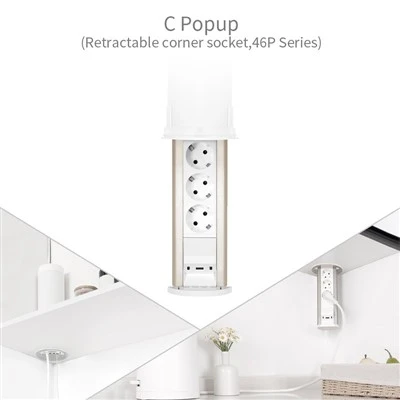
Interface arrangement is another key element in desktop power strip design. Designers need to plan power outlets, USB ports, and other functional modules according to different device requirements. A well-organized interface layout improves space utilization and prevents cable crossing during use, creating a cleaner desktop environment. Some modern desktop power strips also adopt modular designs, allowing users to expand functions based on specific needs.
Appearance design also plays an important role in user experience. Modern users not only focus on product functionality but also expect products to match their working and living environments. Therefore, desktop power strips often feature simple and stylish designs combined with concealed cable management, compact structures, and flexible installation methods to adapt to different applications.
In terms of manufacturing materials, desktop power strips usually use different materials for various components according to their functions. The housing is commonly made from engineering plastics with good heat resistance, flame-retardant properties, and impact resistance, such as ABS or flame-retardant PC materials. These materials improve product safety and extend service life. Internal conductive components are usually made from metals such as copper, which provide excellent electrical conductivity, improve current transmission efficiency, and reduce resistance and heat generation.
The materials used for power cables, interface components, and protective structures also influence overall product performance. High-quality cable materials improve flexibility, wear resistance, and long-term reliability, while durable interface materials enhance connection stability and plug-in durability.
In the future, with the development of smart offices and smart homes, desktop power strips will continue to advance in design and material applications. By integrating intelligent technologies, environmentally friendly materials, and innovative structural solutions, desktop power strips will further improve safety and functionality, providing users with more efficient and reliable power management solutions.